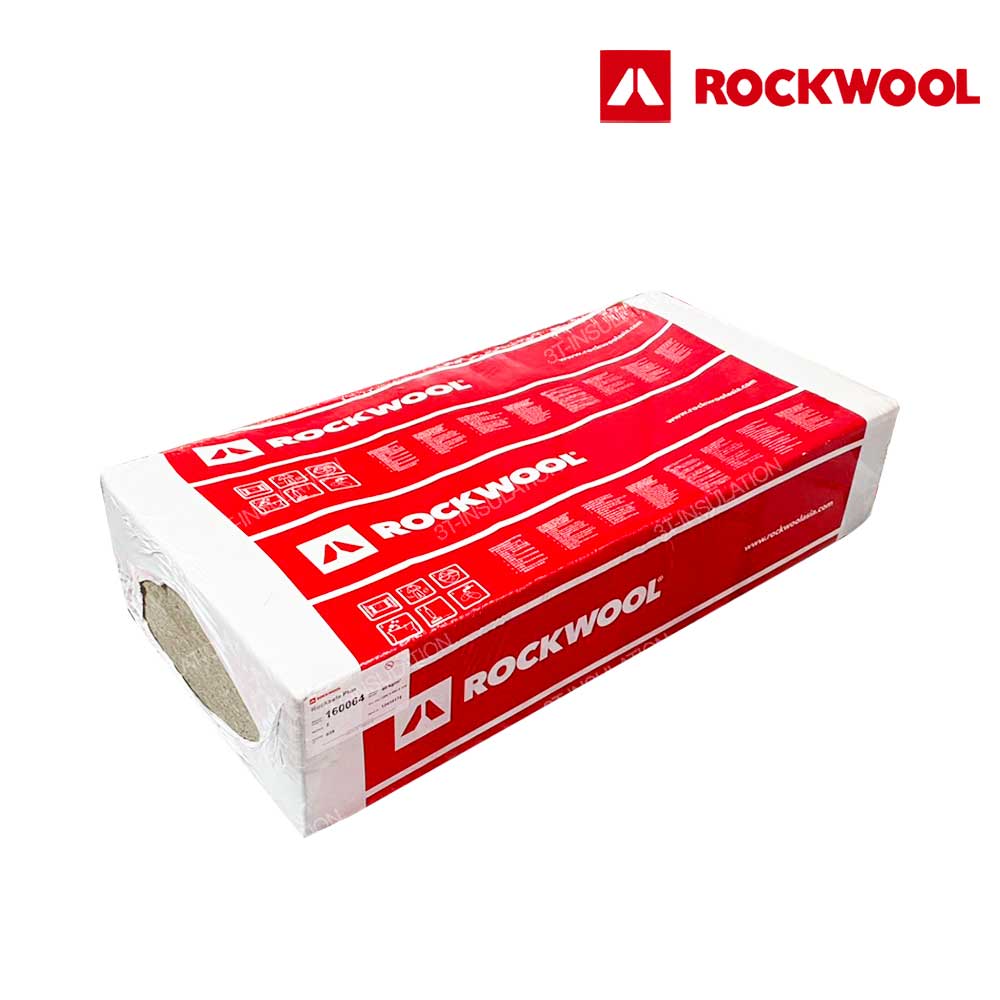
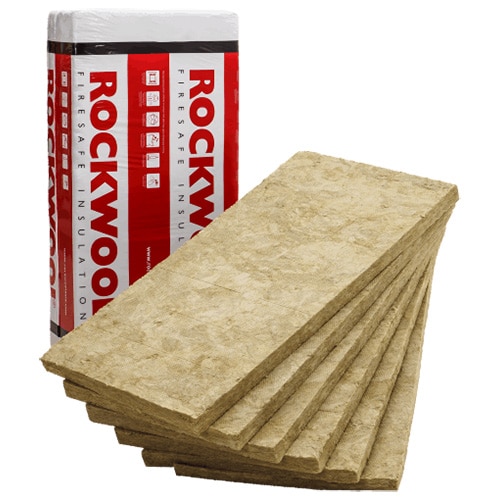
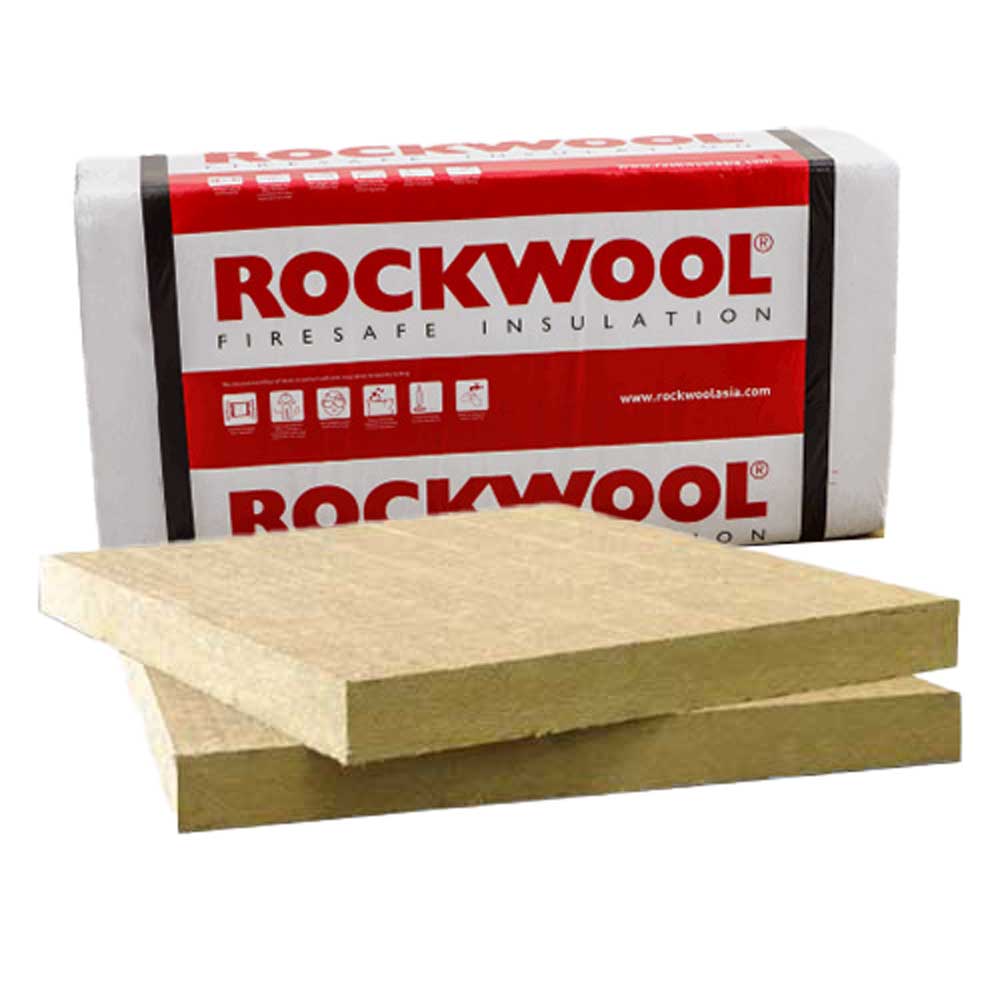
ROCKWOOL Stone Wool Insulation for Fire Barrier, Conlit H110 Model
$53.08
$102.44
Conlit H110 Conlit H110 stone wool insulation is designed for Fire Barrier applications, based on long-lasting fire resistance in buildings during fire incidents. This allows architects and fire engineers to be confident that the design can help save lives during a fire. Conlit H110 is widely used in fire protection applications including fire walls for area compartmentation, sealing gaps for water or air pipes penetrating between floors, or Fire Barrier work. During a fire, 80% of deaths are caused by smoke. Non-combustible material EN13501-1 In fire resistance or fire protection work, the first important point is that the material must be “Non-Combustible” and must not cause the fire to spread further. Conlit H110 stone wool insulation has been tested according to EN13501-1 standard to classify materials from A – F based on fire severity. Table classifying materials by fire severity Definition Classification according to European Standard EN 13501-1 Non-Combustible materials A1 A2 – s1d0 A2 – s1d1 A2 – s1d2 A2 – s2d0 A2 – s2d1 A2 – s2d2 A2 – s3d0 A2 – s3d1 A2 – s3d2 Combustible materials – very limited contribution to fire B – s1d0 B – s1d1 B – s1d2 B – s2d0 B – s2d1 B – s2d2 B – s3d0 B – s3d1 B – s3d2 Combustible materials – limited contribution to fire C – s1d0 C – s1d1 C – s1d2 C- s2d0 C – s2d1 C – s2d2 C – s3d0 C – s3d1 C – s3d2 Combustible materials – medium contribution to fire D – s1d0 D – s1d1 D – s1d2 D – s2d0 D – s2d1 D – s2d2 D – s3d0 D – s3d1 D- s3d2 Combustible materials – highly contribution to fire E E – d2 Combustible materials – easily flammable F “s” Smoke emission level: ranges from 1 (low-no smoke) to 3 (high smoke emission) “d” Flaming droplets: ranges from 0 (no droplets) to 1 (many droplets) Table showing levels of smoke production and flaming droplets Additional class Level Definition Smoke emission during combustion S 1 Quantity/speed emission of absent or weak 2 Quantity/speed emission of average intensity 3 Quantity/speed emission of high intensity Production of flaming droplets/particles during combustion D 0 No dripping 1 Slow dripping 2 High dripping From the material classification table, we can see that Conlit H110 stone wool insulation is a Class A1 material, which is non-combustible, does not produce smoke, and does not create flaming droplets. Therefore, it can be confidently used as a material for fire protection. Flame spread = 0, Smoke development = 0 In fire protection, what causes high mortality is not “flames” but “smoke”. Therefore, materials used in fire protection must not produce smoke. The ASTM E84 test was designed to measure the surface flame spread and smoke density. The test results for Conlit H110 stone wool insulation show a Flame spread = 0 and Smoke development = 0. This is because ROCKWOOL stone wool insulation is a non-combustible material, so it cannot spread fire and does not produce smoke when burned. Low thermal conductivity ASTM C518 The design of fire walls is intended to contain the fire in a limited area. People on the other side of the fire wall may not even know that a fire is occurring on the other side. The reason people on the other side of the fire wall don’t know about the fire is due to the low thermal conductivity. Little heat passes through the wall, keeping the wall temperature almost normal. To know if there’s a fire on the other side, we need to check the door handle. Try placing your hand near it; if the handle is hot, it indicates a fire on the other side. Low thermal conductivity helps reduce heat from the opposite side of the wall. Fire insulation is therefore another essential material in fire protection. It not only helps prevent fire from entering safe areas but also increases escape time by an additional 2-3 hours. Shrinkage ASTM C356 During a high-temperature fire, the sealing materials we use at pipe joints or wall openings may shrink. If significant shrinkage occurs, it can enlarge the opening, allowing flames to spread from the contained area. Therefore, the shrinkage of fire insulation is crucial, and a test method for high-temperature insulation shrinkage, ASTM C356, has been established. This standard simulates fire conditions and measures material shrinkage. Test results show that Conlit H110 stone wool insulation shrinks only 2%, which is very minimal and highly suitable for fire protection applications. Applications Fire Seal for pipe penetrations through fire-resistant walls Sometimes we encounter pipes passing through fire walls used to compartmentalize buildings. According to NFPA standards, the pipe openings must be lined with fire-resistant insulation to prevent fire from spreading across the wall. Lining fire wall joints to reduce flame spread. Fire Resistant Wall In building compartmentation, concrete walls are installed with fire-resistant insulation to contain the fire area and provide building occupants more time to evacuate. Fire-resistant walls are built to contain the fire area. Fire Door Fire doors are installed at fire exits or doors in walls that divide building sections. If the wall is designed to resist fire for 2 hours as per standards, the door and materials passing through this fire-resistant wall must also resist fire for 2 hours. Fire escape for evacuating during a fire.